JCB Gas Station
Built and OperationalI Automated the Business I Personally Operate.
How I turned JCB Gas Station from an owner-dependent operation into a business I can monitor and manage from anywhere.
My role: Business Owner, Product Designer, Systems Architect, and Builder
The challenge
Running a gasoline station requires much more than recording daily sales.
Fuel is a liquid asset that moves through deliveries, storage tanks, pumps, and customer transactions. It cannot be counted like ordinary products on a shelf. Even a small unexplained difference can affect inventory, cash reconciliation, profit calculations, and management decisions.
At the same time, the business must manage employees, attendance, shifts, expenses, payments, daily sales, and long-term financial performance.
As the owner of JCB Gas Station, I experienced these problems directly. I needed more than a generic point-of-sale application. I needed one system that could tell me what was happening across the business—even when I was not physically there.
The system I built
I designed and built a centralized gas-station management system that connects and automates the station's essential operations.
It brings fuel inventory, sales, expenses, employee management, attendance, cash flow, profit margins, and overall business performance into one controlled dashboard.
Instead of depending on paper records, separate spreadsheets, and verbal reports, I can access the information I need from anywhere and act with confidence.
What changed
The most valuable result was not simply replacing paper with a screen.
The system reduced the station's dependence on my constant physical supervision. I can monitor inventory, sales, employees, attendance, cash flow, profit margins, and business performance wherever I am.
Automation handles the repetitive tracking and organization. I remain in control of the decisions that affect the business.
That gives me the time and confidence to work on my other businesses without losing visibility over the gasoline station.
- Business
- JCB Gas Station
- Project type
- Internal business operations system
- My role
- Business Owner, Product Designer, Systems Architect, and Builder
- Status
- Built and Operational
Core capabilities
- Fuel delivery and inventory recording
- Beginning and ending fuel inventory
- Tank and pump monitoring
- Fuel movement and variance tracking
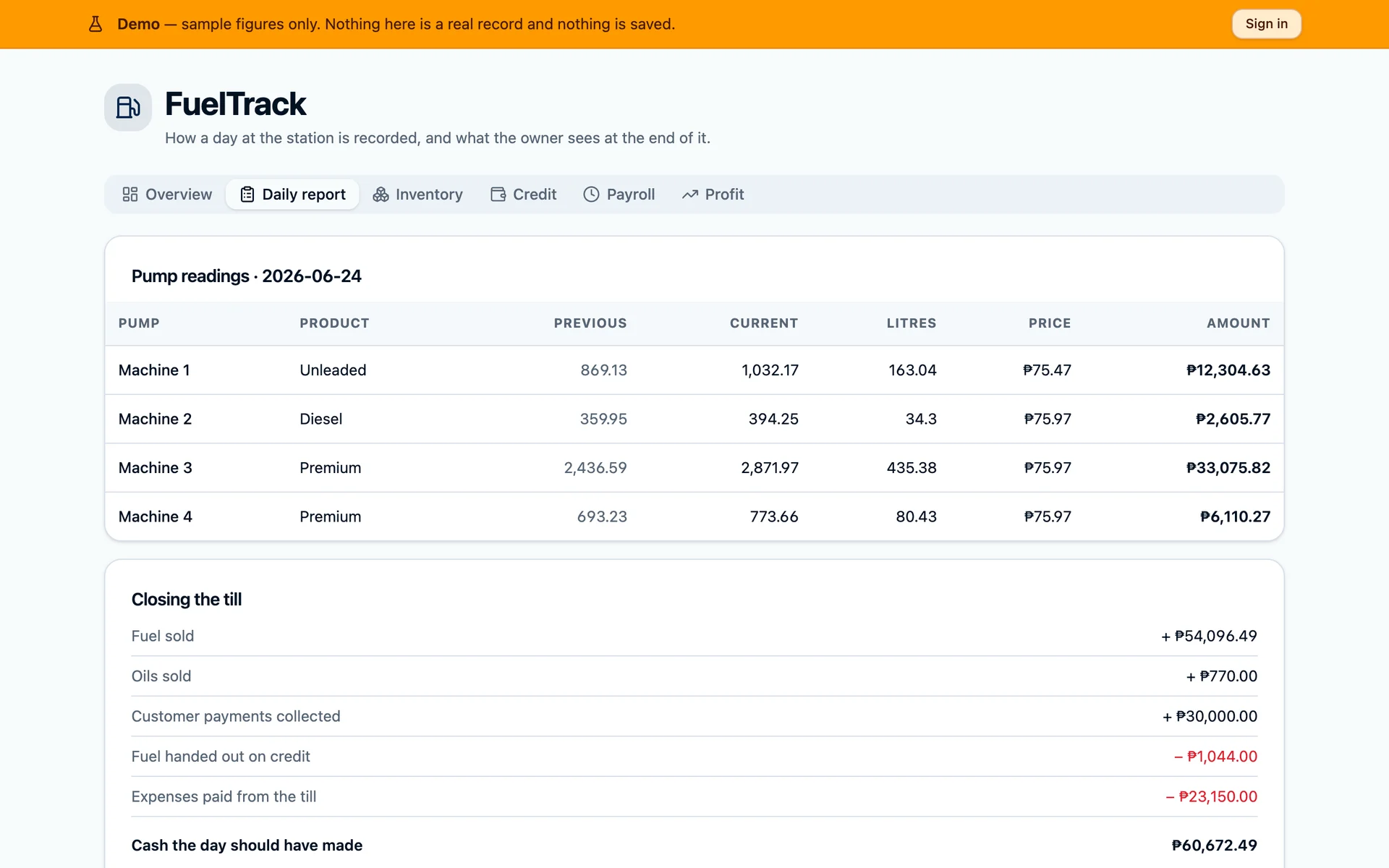
- Daily fuel and non-fuel sales records
- Product inventory management
- Cash and payment reconciliation
- Operating expense tracking
- Employee profiles and records
- Employee attendance and time tracking
- Shift and work-hour monitoring
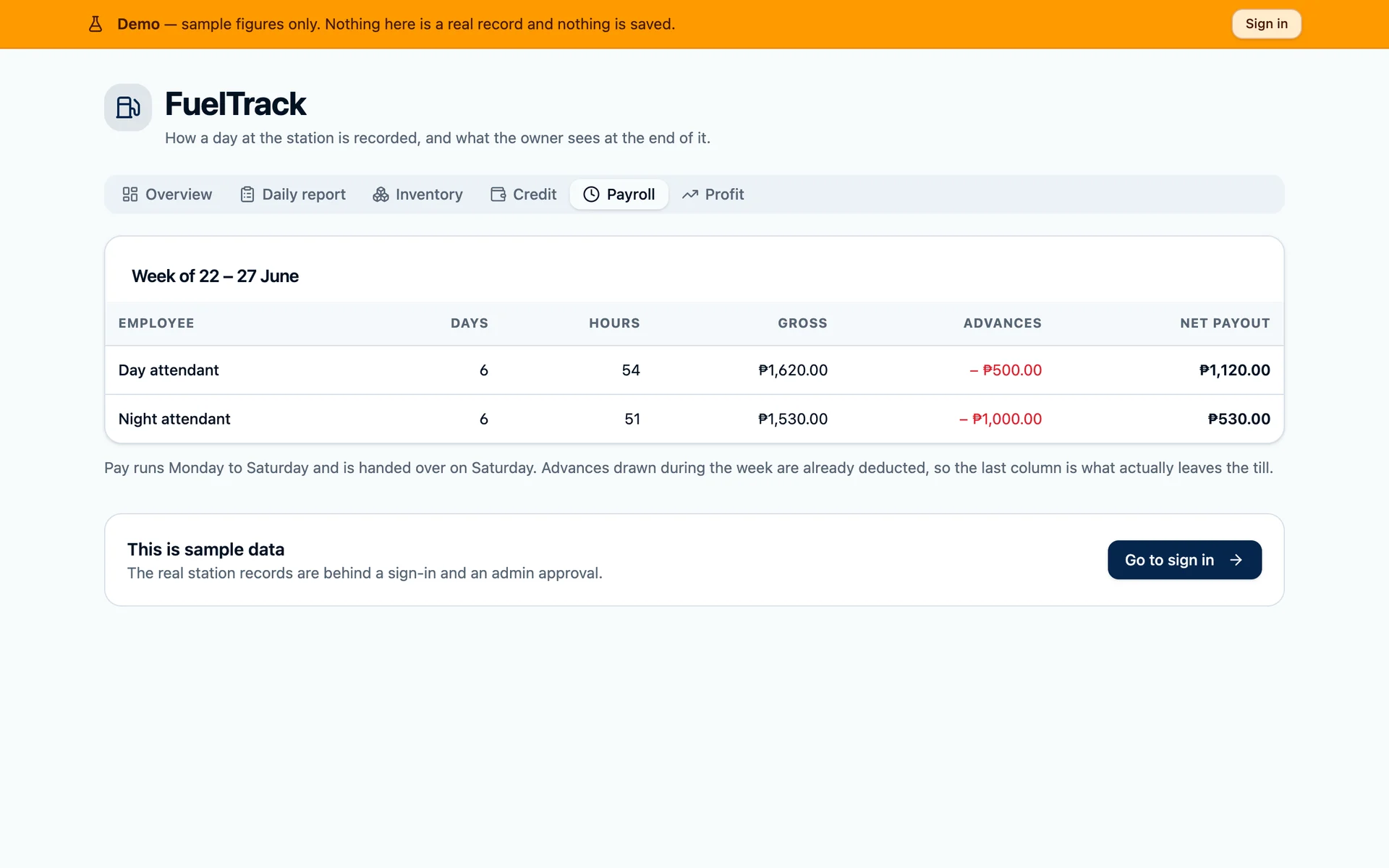
- Payroll-related operational data
- Daily, weekly, monthly, and lifetime cash-flow visibility
- Revenue and profit-margin monitoring
- Business KPI dashboard
- Historical performance reporting
- Remote owner-level business monitoring
How information moves
- Fuel Delivery
- Pump Activity
- Sales
- Expenses
- Employee Time
- Inventory
- Cash Flow
- Margin
- KPI
- Owner Dashboard
Outcomes
Remote visibility
See essential business information without being physically present.
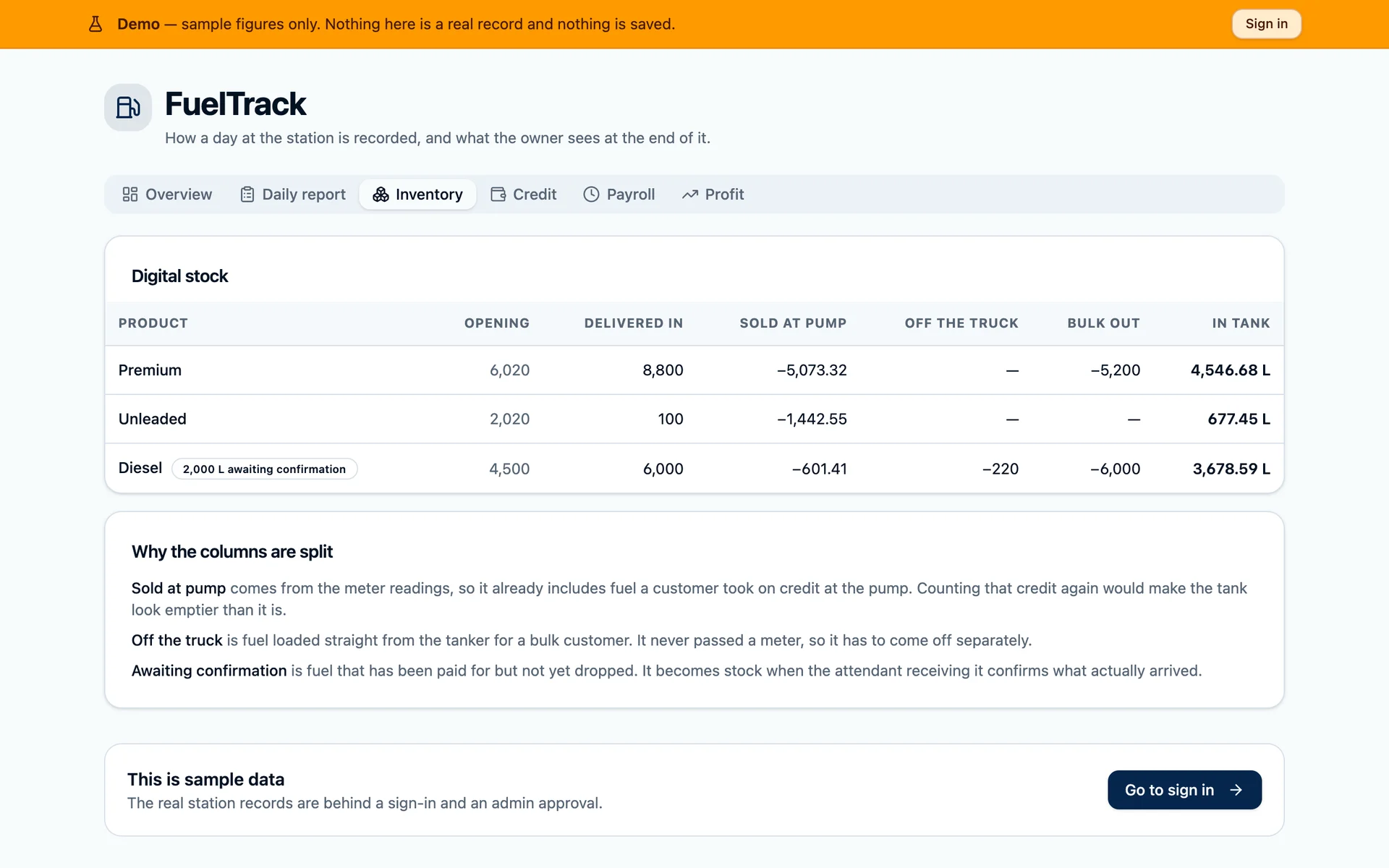
Liquid inventory control
Monitor one of the most difficult types of inventory to track.
Employee accountability
Connect employee records, attendance, shifts, and operating activity.
Financial clarity
Track cash flow, revenue, expenses, and profit margins across the life of the business.
Faster decisions
Identify discrepancies and operational issues earlier.
Owner freedom
Operate other businesses without losing control of the station.
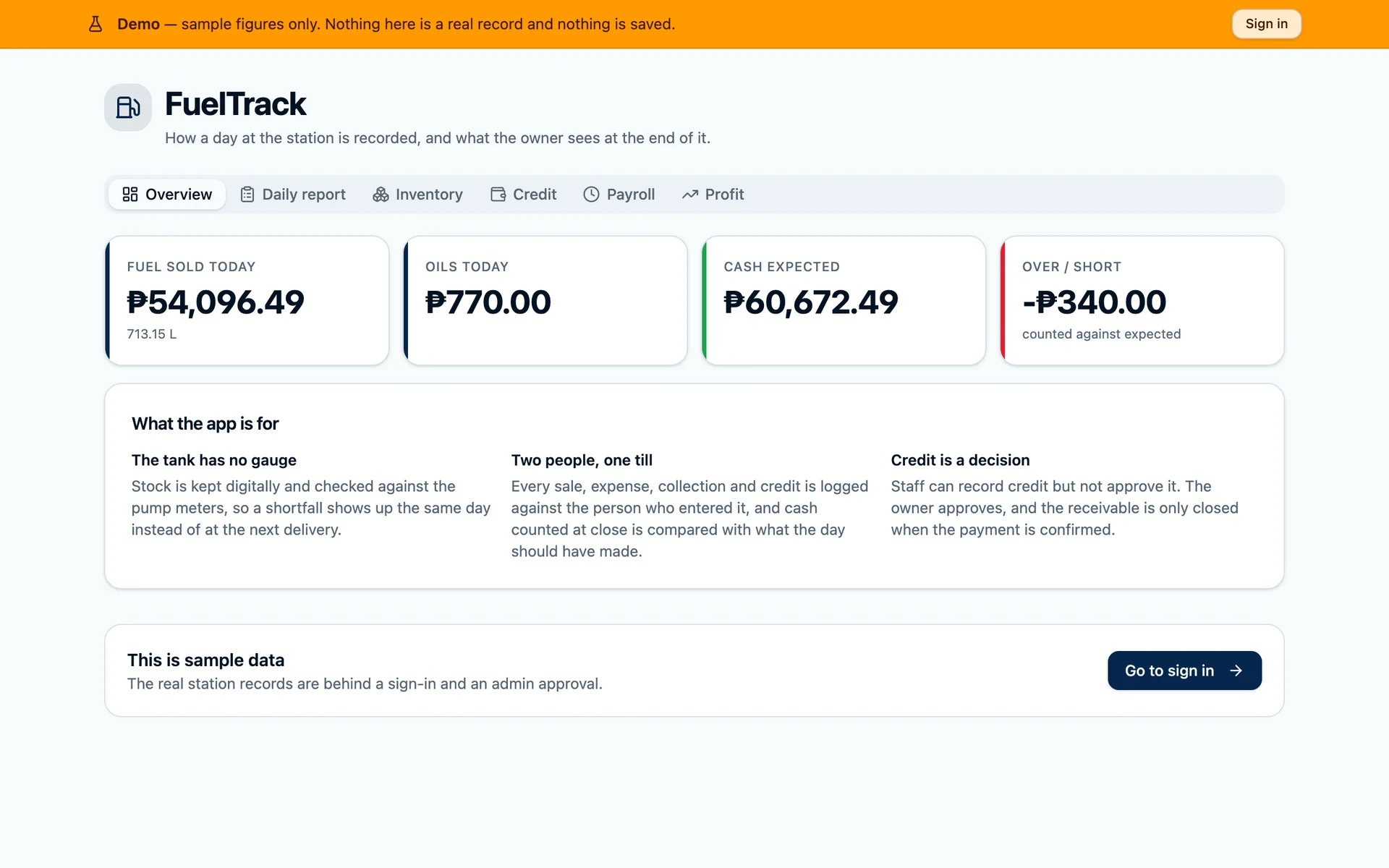
System views
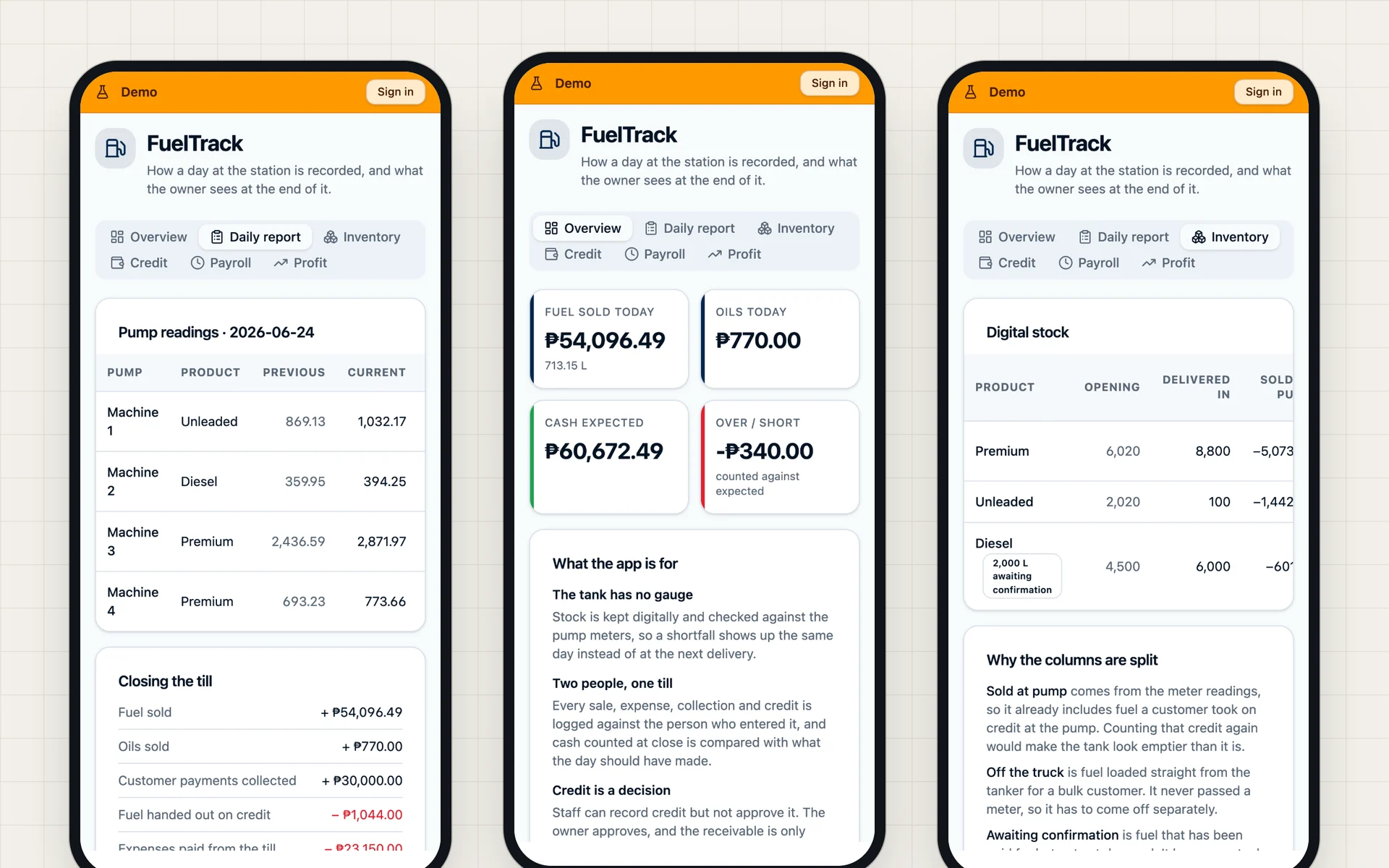
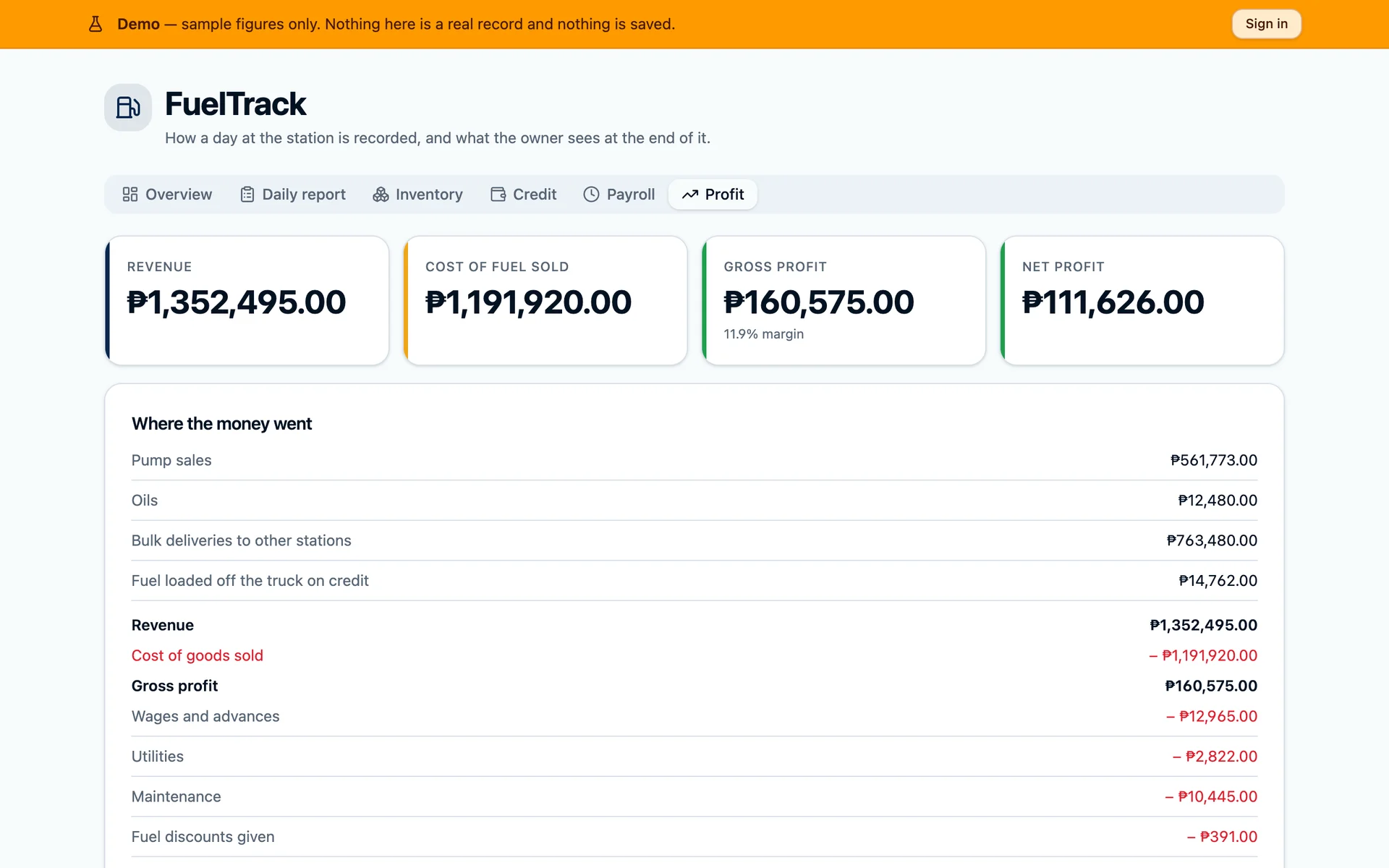
Screens from the public FuelTrack demo, shown with sample figures. The station's real records stay behind a sign-in. Open the live demo
Why this project matters
This was not a hypothetical client brief.
I built it because I understood the operation, carried the business risk, and needed the system to work in a real company.
It represents how I approach every automation project:
- Understand the operation
- Find where control is being lost
- Connect the data
- Automate repetitive work
- Give the owner clear information
- Keep important decisions human-controlled